
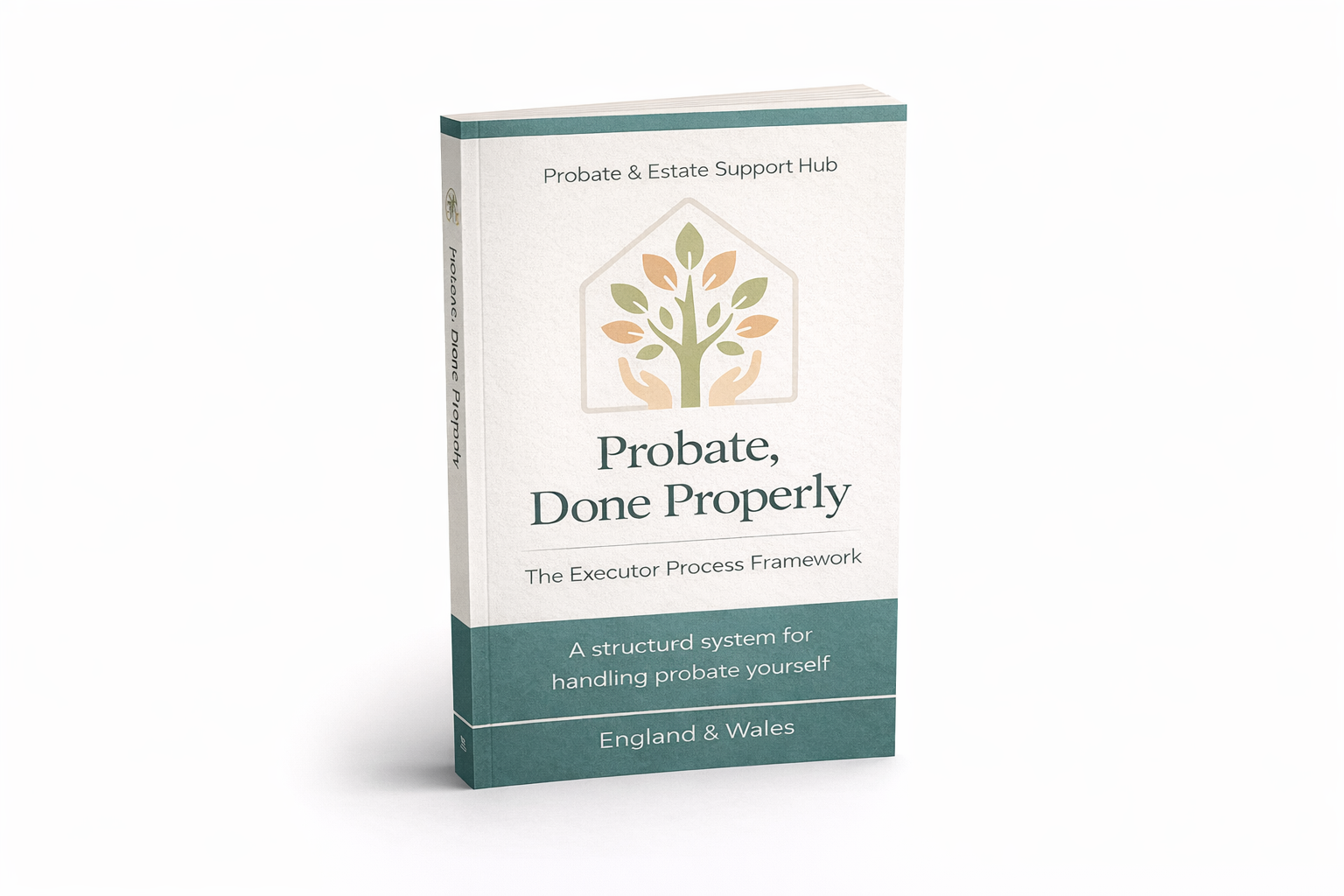

Probate, Done Properly
How to handle probate yourself in England & Wales — without guessing or risking mistakes
If you are acting as an executor or administrator, you are personally responsible for getting probate right.
What this guide gives you
This guide gives you control, confidence, and protection while handling probate yourself.
It shows you how to:
- know exactly what to do next — and what not to do yet
- handle probate calmly and methodically, rather than reactively
- avoid the common executor mistakes that quietly create risk or delay
- deal with probate yourself and inexpensively, without cutting corners
- recognise when to pause — before a straightforward estate becomes a problem
Most executor issues don’t come from filling in the wrong form.
They come from acting too early, rushing decisions, or not realising when responsibility has increased.
This guide is designed to prevent that.
The outcome you’re buying
By using this guide, you can:
- move through probate with clarity instead of uncertainty
- make decisions you can explain and defend if questioned later
- avoid unnecessary professional fees while still acting responsibly
- finish the process knowing you handled the role properly, not just quickly
It replaces guesswork with structure — and anxiety with judgement.
Who this guide is for
This guide is for you if:
- you are acting as executor or administrator
- you want to handle probate yourself, but not blindly
- you care about getting it right, not just getting it done
It is especially valuable if probate feels manageable — but the responsibility feels heavy.
Who this guide is not for
This guide is not suitable if:
- the estate is already disputed or likely to be contested
- there are complex trusts, overseas assets, or business structures you are uncomfortable handling
In those situations, professional advice is usually appropriate.
This guide explains when to pause, but it does not replace representation.
What’s actually inside the guide
If you’ve read this far, you probably want to know exactly what you’re getting.
The guide is structured to follow the real-world probate journey, from start to finish.
Each chapter explains:
- what stage you’re at
- what matters most at that point
- what can safely wait
- where executors most often go wrong
Chapter overview
Chapter 1 — How to use this guide
How to approach probate sensibly, avoid rushing, and use the guide as a working reference rather than a one-off read.
Chapter 2 — Before you start probate
What you can do immediately after a death, what must wait, and how to avoid early actions that create problems later.
Chapter 3 — What documents you actually need (and what you don’t)
What to gather, what to ignore, and how to avoid wasting time chasing paperwork that adds no value.
Chapter 4 — Valuing the estate
How valuation standards differ depending on the estate, what “reasonable” looks like, and when professional input is (and isn’t) sensible.
Chapter 5 — Inheritance tax in practice
How tax fits into probate without turning the process into a tax exercise, and how to recognise when reporting standards change.
Chapter 6 — Applying for probate
How to approach the application calmly and correctly, and what the grant really does — and does not — allow you to do.
Chapter 7 — After probate is granted
What changes once authority is given, how to collect assets properly, and where executors still need to be careful.
Chapter 8 — Paying debts and expenses
How to handle liabilities, reimbursements, and payments in the right order, and protect yourself from personal exposure.
Chapter 9 — Estate accounts, made simple
What records are actually expected, how to prepare them proportionately, and how to avoid over-engineering.
Chapter 10 — Distributing the estate
How to approach interim and final distributions carefully, manage expectations, and close the estate properly.
Chapter 11 — When DIY probate stops making sense
Clear guidance on recognising when risk, complexity, or pressure means it’s time to pause and consider professional help.
What’s included with your purchase
Alongside the main guide, you also receive practical supporting materials designed to make administration easier, not more bureaucratic:
- Executor working documents (Excel workbook)
A simple, structured workbook to help you record:- estate assets and liabilities as they are identified
- actions taken and key correspondence
- money received into the estate
- payments, expenses, and reimbursements
- estate accounts and beneficiary distributions
- Guidance on how to use the workbook properly
- Executor letter to institutions
- Probate stage checklist
- Valuation evidence checklist
- Beneficiary distribution confirmation template
These are working tools — not legal forms — designed to support clarity and record-keeping.
Optional next step
Many executors choose to use this guide together with Executor Mistakes & Risks, which focuses specifically on personal liability, communication issues, and the situations most likely to lead to challenge or dispute.
Together, they form a complete DIY executor reference — process and protection.
Final note on responsibility
This guide provides general information and practical guidance.
It does not provide legal advice.
It does, however, help you act carefully, reasonably, and with structure — which is what executors are judged on in practice.